


Who is ready to serve one million meals?
When 50,000 troops took part in a military exercise in Norway, it required more than one million meals, 1.6 million bottles of water and 110 tonnes of laundry. Behind 14 days of exercises were six months of logistics planning and operations. As Boden takes on an increasingly important role in Swedish and NATO defence, the need for civilian capacity is also growing – along with new opportunities for local businesses
At Demo North in Boden, representatives from the business community, public sector and armed forces came together to discuss the opportunities emerging as the security environment changes and the Swedish Armed Forces expand.
For Boden, Sweden’s membership of NATO has further changed the conditions. Morgan Gustafsson, Lieutenant Colonel and Head of Planning at Norrbotten Regiment I 19, described how the region has been identified as strategically important and how, in the event of a conflict, large military formations must be able to move through the region on their way to Finland. Military capability alone will not be enough.
– Civilian capacity needs to develop in step with these new requirements. This needs to happen in peacetime so that we are able to support the forces that would need to pass through here in the event of a conflict, says Morgan Gustafsson.
The climate and vast distances make the task particularly challenging. Meeting those challenges will require a logistics network that extends far beyond the Swedish Armed Forces.
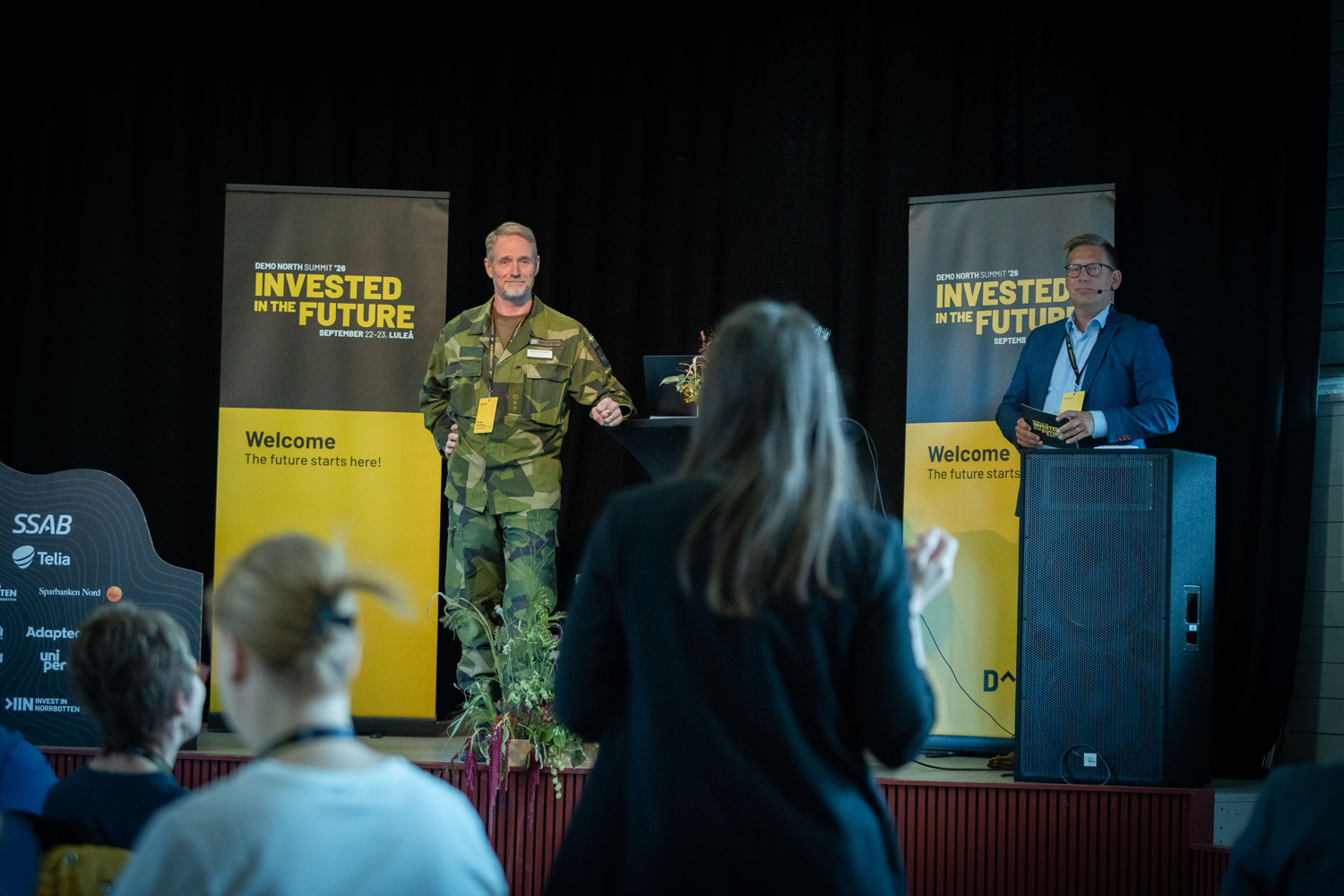
Morgan Gustafsson, Chief of Planning, The Norrbotten Regiment I19, Swedish Armed Forces
14 days required six months of logistics
The scale of the task was illustrated by Tore Jacobsen, Head of Business Development at NorSea Group, who has extensive experience of Host Nation Support in Norway.
During the NATO exercise Trident Juncture 2018, around 50,000 personnel from 31 countries took part. The field exercise itself lasted 14 days, but behind it were around six months of round-the-clock logistics and coordination.
Jacobsen presented some of the figures: more than one million meals, 1.6 million bottles of water, 110 tonnes of laundry and more than 15,000 vehicles and containers cleaned.
– We would never have been able to carry it out without good agreements with local suppliers and without having trained together beforehand, he says.
In the event of a conflict, Boden and the surrounding region may, according to the scenarios presented by Jacobsen, need to handle more than 100,000 troops – and for a significantly longer period.
Local businesses become part of the solution
Boden Municipality and Nordic Way Services have signed a letter of intent to explore the conditions for developing Host Nation Support in Boden. Part of this work involves identifying the capacity that already exists and where it needs to be strengthened.
Is there enough fuel? Accommodation? Transport capacity? Technical services?
– Local businesses are the ones that will be there in the event of a crisis or conflict. That is why our strategy in Norway has been to work with local companies, and I believe that is equally important in Sweden.
Nordic Way Services is owned by Wallenius Lines and works with Norwegian companies within the Wilhelmsen sphere, bringing experience from both international logistics and practical Host Nation Support. The aim is to combine that expertise and capacity with resources that already exist locally.
This could create opportunities for many more businesses than traditional defence contractors. Transport, construction and contracting services, property, accommodation, fuel and technical services are just some examples.
– If you need an electrician or a plumber in the middle of the night, local companies are there. In Norway, they have shown great pride in being able to contribute – and demonstrated that they can deliver.
However, these networks need to be established before they are needed. Companies may have to meet specific requirements, and personnel may need to undergo security vetting.
Another important aspect is identifying investments that provide value even when there is no crisis.
– We think a lot about dual use. How can we develop capabilities in Boden that can be used in peacetime, but also in the event of a conflict and as part of Host Nation Support? says Tore Jacobsen.
For Boden, this work could therefore mean more than strengthened preparedness. The right investments and partnerships could also create new business opportunities, strengthen the local economy and build capacity that provides value every day.

Tore Jacobsen, Vice President of Business Development at NorSea
byline
Text by: André Samuelsson
Photo by: Head image: Mats Engfors/Fotographic Article image: Viveka Österman
Published:
